Subtotal $0.00

- 10641 S Sam Houston Pkwy W Suite 200, Houston, TX 77071, United States
- +346-458-0930
- info@phoneixwholesale.com

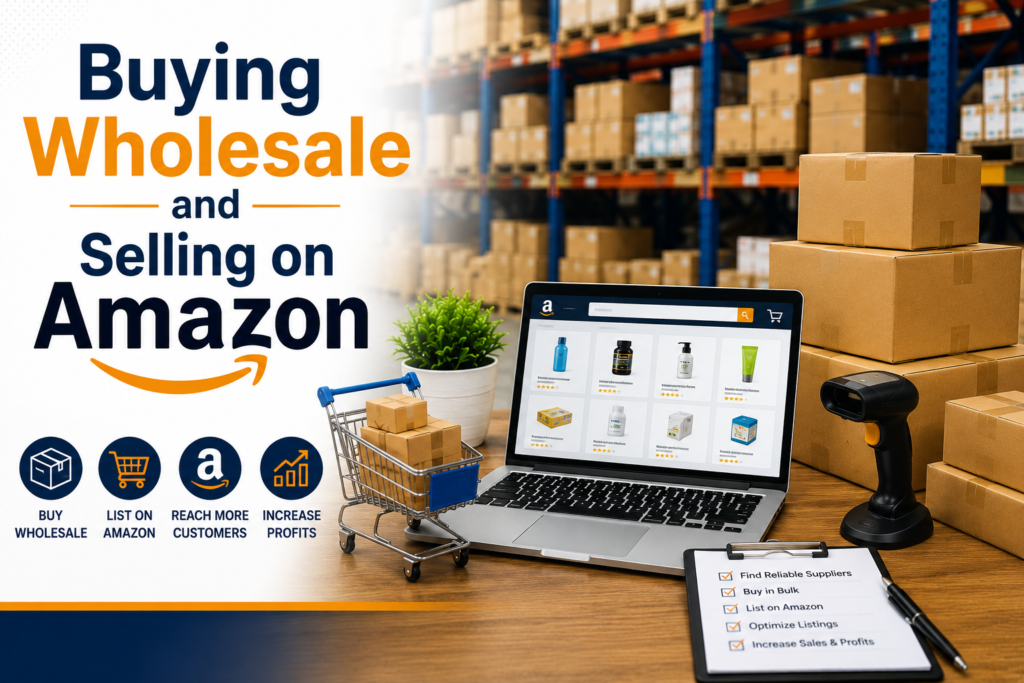
If you’re looking for one of the safest and most scalable ways to earn on Amazon, buying wholesale and selling on Amazon is a proven business model. Instead of creating your own products, you purchase genuine branded items in bulk from authorized suppliers and resell them through Amazon. This approach reduces product development costs while allowing you to build a sustainable business with consistent inventory.
Whether you’re new to Amazon FBA or looking to expand your existing store, understanding how wholesale sourcing works can help you avoid costly mistakes and grow faster. In this guide, you’ll learn how to buy wholesale products, find reliable suppliers, calculate profits, and build a long-term Amazon business.
Buying wholesale and selling on Amazon means purchasing products in bulk from manufacturers, distributors, or authorized wholesalers at discounted prices and reselling them on Amazon for a profit.
Unlike private label selling, you don’t create your own brand. Instead, you sell products that already have demand, customer reviews, and established sales history.
This business model is popular because it offers:
Thousands of sellers are switching to wholesale because it provides greater stability than constantly searching for trending products.
Some major advantages include:
When you work with reliable wholesale suppliers, your business becomes easier to manage as it grows.
Register Your Amazon Seller Account
Before you begin buying wholesale and selling on Amazon, you’ll need a Professional Amazon Seller account.
You’ll also want to prepare:
Professional accounts unlock advanced selling features and allow you to scale efficiently.
Find Reliable Wholesale Suppliers
Finding trusted suppliers is the foundation of your business.
You can source products through:
Authorized Brand Distributors
Buying directly from brand distributors ensures authentic inventory and valid invoices.
Wholesale Directories
Professional wholesale directories help connect Amazon sellers with verified suppliers.
Trade Shows
Industry events allow you to meet suppliers, negotiate pricing, and discover new products.
Local Wholesale Companies
Many successful sellers work with U.S.-based wholesalers for faster shipping and better communication.
Choose Profitable Wholesale Products
Not every product is worth selling.
Before purchasing inventory, evaluate:
Avoid selecting products based only on low wholesale prices. Profitability depends on total costs.
Calculate Your Profit Margin
One of the biggest mistakes beginners make is ignoring expenses.
Your calculations should include:
Healthy wholesale businesses generally aim for:
Send Inventory to Amazon FBA
Once you’ve purchased products, prepare them according to Amazon’s FBA requirements.
This usually includes:
Amazon stores your inventory and handles picking, packing, shipping, and customer service.
Common Mistakes to Avoid
Many new sellers struggle because they make avoidable mistakes.
Buying Too Much Inventory
Start with a small test order before placing larger purchases.
Choosing Unverified Suppliers
Always request invoices and verify supplier legitimacy.
Ignoring Amazon Restrictions
Some brands require approval before you can sell them.
Focusing Only on Cheap Products
Low prices don’t always equal high profits.
Poor Inventory Management
Running out of stock can negatively impact rankings and sales.
Successful Amazon wholesale sellers focus on consistency rather than shortcuts.
Best practices include:
Over time, these habits create a stable and scalable business.
Many sellers prefer U.S.-based wholesalers because they offer:
Working with domestic suppliers can simplify operations and improve inventory planning.
Yes. Wholesale remains one of the most reliable Amazon business models because you’re selling products with proven demand instead of guessing what customers want.
While competition exists, sellers who choose the right products, work with trusted suppliers, and manage inventory effectively can build consistent monthly revenue.
The key is treating wholesale as a long-term business rather than looking for quick profits.
Is buying wholesale and selling on Amazon legal?
Yes. Purchasing authentic products from authorized suppliers and reselling them on Amazon is completely legal.
Do I need a business license to buy wholesale?
Most wholesalers require a business license or resale certificate before opening a wholesale account.
How much money do I need to start?
Many sellers begin with $500–$2,000, depending on product selection and inventory size.
Can beginners succeed with Amazon wholesale?
Absolutely. Starting with small inventory orders and reliable suppliers helps reduce risk while gaining experience.
Is wholesale better than private label?
Wholesale offers faster product launches and lower branding costs, while private label provides greater control and potentially higher long-term margins. The best choice depends on your business goals.
Buying wholesale and selling on Amazon remains one of the most effective ways to build a sustainable eCommerce business in 2026. By sourcing authentic products from trusted wholesalers, choosing profitable inventory, and using Amazon FBA for fulfillment, you can create a scalable business with recurring sales.
Instead of chasing short-term trends, focus on building strong supplier relationships, maintaining healthy profit margins, and expanding your product catalog over time. With the right strategy and consistent execution, wholesale selling can become a reliable source of long-term business growth and success.


