Subtotal $0.00

- 10641 S Sam Houston Pkwy W Suite 200, Houston, TX 77071, United States
- +346-458-0930
- info@phoneixwholesale.com

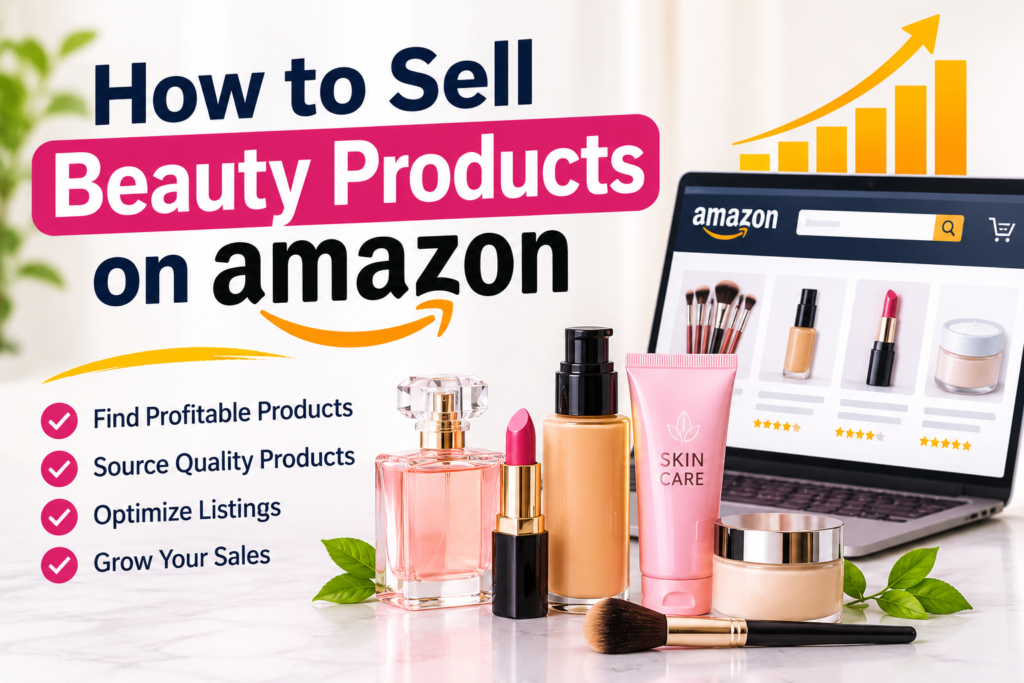
The beauty industry offers Amazon sellers a wide range of products to explore, from skincare and hair care to cosmetics and everyday personal care essentials. Customers regularly shop online for products that fit their routines, preferences, and budgets. For sellers, this creates opportunities to build a business around products that people already understand and use.
However, success does not come from choosing a popular beauty product and listing it on Amazon. Sellers must understand product demand, competition, sourcing, profit margins, and Amazon’s selling requirements before investing in inventory.
If you are researching how to sell beauty products on Amazon, the best starting point is to build a clear plan. This guide explains how to choose suitable products, find wholesale inventory, prepare listings, calculate profitability, and avoid common mistakes that can affect your business.
Beauty products cover several different customer needs. Some shoppers look for daily skincare essentials, while others purchase hair styling products, makeup, bath products, and personal care items. This variety allows sellers to research different product types rather than relying on a single item.
For example, a seller might investigate:
Each product type has its own costs, competition, customer expectations, and compliance considerations. A product with strong demand may still be difficult to sell if too many established sellers compete for the same customers or if its selling restrictions are difficult to meet.
The goal is not simply to find a beauty product that sells. It is to identify an item that fits your budget, has a reasonable profit opportunity, and can be sourced and listed properly.
Start With Product Research, Not Inventory Purchases
One of the most common mistakes new Amazon sellers make is buying stock before researching the product. A product may look attractive in a wholesale catalog, but that does not automatically mean it is a good investment.
Before choosing an item, study its existing Amazon listing and evaluate whether the opportunity makes sense for your business.
What should you check?
Demand and sales activity
Look for evidence that customers are purchasing the product consistently. Sales estimates, Best Sellers Rank (BSR), historical trends, and relevant research tools can help you evaluate demand. Remember that BSR is a relative ranking and does not guarantee a particular number of sales.
Competition
Check how many sellers offer the same product, whether established brands dominate the listing, and how pricing changes between sellers. A popular product with intense competition may offer less room for profit than a less crowded alternative.
Customer reviews
Read reviews to understand what buyers appreciate and what they dislike. Repeated complaints about packaging, product quality, scent, or usability may reveal important considerations before you purchase inventory.
Product stability and shelf life
Some beauty products have expiration dates, lot codes, or storage requirements. Check these details before ordering, especially if you intend to purchase in bulk.
Amazon selling eligibility
Search for the exact product in Amazon Seller Central before committing to a wholesale purchase. Some products or brands require approval, and certain items have additional compliance requirements.
A little research at this stage can help you avoid spending money on inventory that you cannot list or sell profitably.
Not every beauty product suits every seller. Your budget, sourcing options, experience, and fulfillment method should influence your decision.
A useful approach is to compare several product opportunities rather than selecting the first item that appears profitable.
| Product consideration | What to evaluate |
| Selling price | Does the market price leave room for all selling costs? |
| Competition | Are many sellers competing on price? |
| Wholesale cost | Can you purchase at a cost that supports a reasonable margin? |
| Product condition | Is the inventory new, authentic, and properly packaged? |
| Expiration or shelf life | Will the products remain suitable for sale during storage and fulfillment? |
| Restrictions | Does the brand or product require approval or documentation? |
| Shipping and storage | Are the package dimensions, weight, and handling requirements manageable? |
Consider two hypothetical opportunities. The first product has high sales activity but many competing sellers and very little profit after fees. The second has more moderate demand, fewer direct competitors, and a healthier margin.
The second product may be a better fit, provided its demand is sufficient and the sourcing and compliance requirements are manageable. This is why product selection should consider the entire business opportunity rather than sales popularity alone.
Once you have identified a potential product, the next step is finding a dependable source of inventory. For sellers who want to build a repeatable Amazon business, wholesale purchasing can provide access to established brands and products already available in the market.
However, choosing a wholesale supplier requires more than comparing prices.
Before placing an order, review the supplier’s business information, product details, purchase terms, and documentation. Confirm that the products are authentic and that the supplier can provide appropriate purchasing records. If Amazon requests documentation during an approval or authenticity review, your records should accurately reflect the actual supply chain.
A low wholesale price is not necessarily the best deal if the supplier cannot provide reliable inventory or suitable documentation. Compare the full purchasing arrangement before deciding where to buy.
Phoneix Wholesale provides wholesale inventory across categories including Beauty & Personal Care, along with product sourcing and support for e-commerce sellers. If you are evaluating wholesale options, you can explore the available products and account registration process on the website to determine whether the inventory fits your business requirements.
Before listing beauty inventory, make sure you understand the rules that apply to the specific product. Amazon’s requirements can vary depending on the product, brand, category, and type of claim made on the listing.
Some products can be listed without additional approval, while others require sellers to apply for permission or submit supporting documentation. Never assume that approval for one beauty product automatically allows you to sell every item from the same brand.
You can check the requirements by signing in to Seller Central and searching for the product through the Add Products section. If Amazon displays an application requirement, review the requested documents and instructions before proceeding.
Depending on the product and application, Amazon may request documentation such as:
Requirements can change, so use the instructions displayed in your seller account and Amazon’s official guidance as the final reference.
For more information, review Amazon’s overview of selling categories and its beauty, skin, and hair care policy.
Beauty products must be represented accurately and meet applicable legal and marketplace requirements. Depending on the product, labeling and documentation may need to include information such as ingredients, product identity, warnings, manufacturer details, or other required particulars.
Before buying inventory, check that the packaging is suitable for the intended market and that the product can be sold in the condition required by Amazon. Do not assume that a product purchased from a retailer or an unfamiliar online seller will automatically meet wholesale documentation or compliance requirements.
A strong product listing answers the questions customers are likely to ask before purchasing. It should communicate what the product is, what it contains, how it is intended to be used, and which details distinguish it from similar options.
When selling an existing branded product, use the correct product detail page where appropriate and follow Amazon’s rules for matching products and listing information. Do not create a duplicate listing simply to avoid competition or change an existing product page to represent a different item.
Focus on these listing elements
Product title: Identify the product clearly using accurate details such as the brand, product type, size, shade, or pack quantity where relevant.
Key features: Explain the actual product features, included items, packaging, and intended use. Avoid unsupported claims about performance or results.
Product description: Provide useful information that helps customers understand the product without repeating the same keywords unnecessarily.
Images: Use clear, accurate product images that comply with Amazon’s image requirements. The main image generally requires a white background and must represent the product correctly. Additional images can help shoppers understand the packaging, size, and other relevant details.
Product attributes: Complete the required fields accurately, including brand, quantity, ingredients, and other information applicable to the product.
Amazon’s product image guide explains its image requirements. Review the current guidance before uploading product images.
Avoid exaggerated beauty claims
Beauty shoppers often pay close attention to product benefits, but sellers should never invent results or make unsupported medical claims. Do not describe a cosmetic product as treating a medical condition unless the product’s regulatory status and applicable requirements support that claim.
Accurate descriptions help customers make informed choices and reduce the risk of misleading listings.
A product can sell regularly and still produce disappointing results if the costs are not calculated correctly. Before ordering wholesale inventory, estimate the full cost of selling each unit.
Your calculation should account for more than the wholesale purchase price.
Include relevant expenses such as:
For example, suppose you purchase a beauty product for $8 and sell it for $20. If your combined Amazon fees, shipping, preparation, and other estimated costs total $7 per unit, your estimated profit would be $5 per unit before any additional expenses not included in the calculation.
The figures are illustrative only; actual fees depend on the product and selling arrangement.
Two useful formulas are:
Profit per unit
Selling price − total costs per unit = estimated profit per unit
Profit margin
(Estimated profit per unit ÷ selling price) × 100 = estimated profit margin
Use current Amazon fee information and your supplier’s actual pricing when calculating your numbers. Also test what happens if the selling price falls or shipping costs increase. A product that remains profitable under reasonable changes is generally a more resilient opportunity than one that depends on perfect conditions.
New sellers can reduce unnecessary risks by paying attention to a few common problems.
Buying inventory before checking approval requirements: A product may require brand or product-specific approval. Check eligibility before making a wholesale commitment.
Choosing products based only on sales rank: A favorable BSR does not guarantee sales volume or profit. Evaluate competition, pricing, and all relevant costs.
Using an unverified supplier: Weak sourcing records can create problems when product authenticity or purchasing documentation is reviewed.
Ignoring expiration dates and storage conditions: Beauty inventory may lose its suitability for sale if it is stored improperly or approaches its expiration date.
Making unsupported claims: Product listings should accurately reflect the product and comply with applicable rules.
Ordering too much too early: Start with a purchasing quantity that suits your budget, expected demand, and ability to replenish stock. Follow the applicable MOQ and supplier terms.
Avoiding these mistakes will not guarantee success, but it can help you make better-informed decisions before committing more money to inventory.
Selling beauty products on Amazon involves more than finding a product that looks popular. Sellers need to research demand, compare competition, verify their suppliers, calculate costs, understand approval requirements, and manage inventory carefully.
Wholesale sourcing can be a useful part of that process when the supplier, products, documentation, and purchase terms fit your business needs. Take time to evaluate each opportunity instead of assuming every established beauty brand will deliver the same results.
If you are ready to explore wholesale inventory for your Amazon business, Phoneix Wholesale offers access to its product categories and wholesale account registration process.
Visit Phoneix Wholesale to explore available inventory, review the wholesale account process, and identify products that may fit your sourcing strategy. Start with careful research, realistic profit calculations, and a clear understanding of Amazon’s requirements before placing your next order.


