Subtotal $0.00

- 10641 S Sam Houston Pkwy W Suite 200, Houston, TX 77071, United States
- +346-458-0930
- info@phoneixwholesale.com

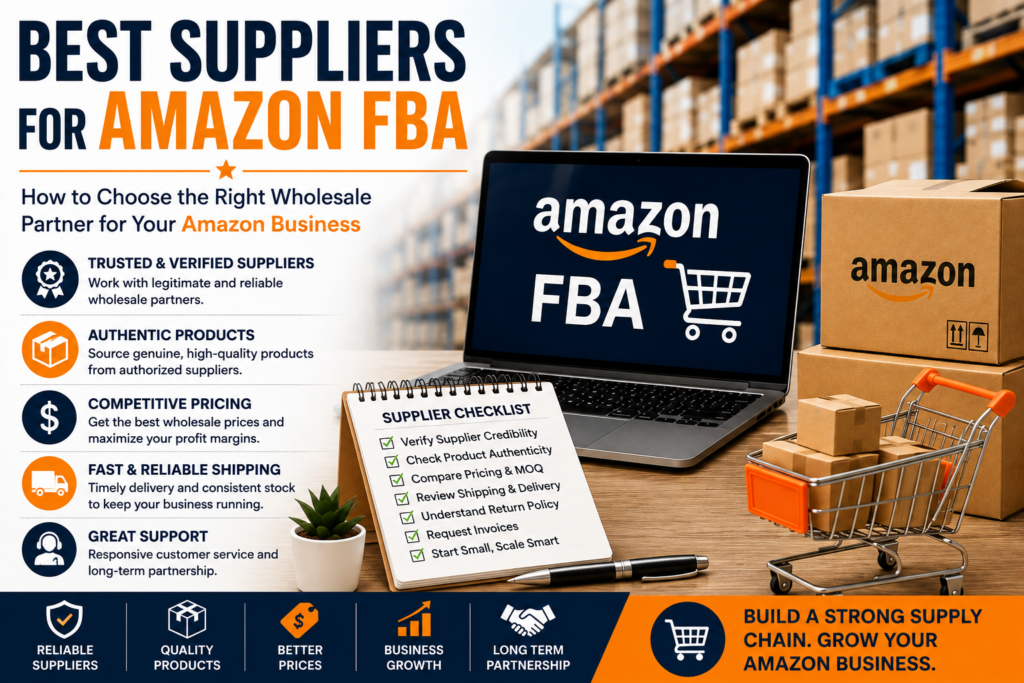
Finding the Best Suppliers for Amazon FBA can make a major difference in how quickly and sustainably an Amazon wholesale business grows. A supplier is more than a place to purchase inventory. The right partner can provide authentic products, competitive pricing, consistent stock, dependable shipping, and the documentation needed to operate confidently.
For new sellers, the biggest mistake is choosing a supplier simply because it offers the cheapest price. A low product cost means very little if the inventory has poor quality, shipping is unreliable, or the supplier cannot provide proper business documentation. Successful Amazon sellers look at the complete sourcing picture before placing an order.
This guide explains what to look for when comparing suppliers and how to identify a wholesale partner that fits your Amazon FBA business.
The Best Suppliers for Amazon FBA generally have several qualities in common. They are legitimate businesses, communicate professionally, offer consistent inventory, and understand the needs of retailers and resellers.
Before choosing a supplier, evaluate:
A supplier that performs well across these areas is usually more valuable than one offering an unusually low unit price.
1. Look for Reliable Wholesale Pricing
Pricing is one of the first things Amazon sellers compare, but it should never be the only factor.
Calculate your expected landed cost, which can include the product price, shipping, preparation, packaging, storage, and other applicable expenses. Then compare that figure with the expected Amazon selling price and marketplace costs.
For example, a product purchased for $8 may appear profitable when sold for $20. But after shipping, preparation, Amazon fees, returns, and other expenses, the actual profit could be considerably smaller.
The Best Suppliers for Amazon FBA help sellers maintain reasonable margins without sacrificing product quality or service.
2. Prioritize Authentic Products
Product authenticity is especially important when selling established brands. Amazon customers expect to receive genuine products, and sellers need to source inventory responsibly.
Before purchasing branded inventory, ask the supplier:
Keeping detailed purchasing records is also a smart business practice. Never assume that a supplier is legitimate simply because its website looks professional.
3. Compare Minimum Order Quantities
Minimum order quantity, or MOQ, can have a major effect on your cash flow.
A supplier may offer an attractive per-unit price but require hundreds or thousands of units. That might work for an established business but create unnecessary risk for a beginner.
When comparing the Best Suppliers for Amazon FBA, consider suppliers that allow you to test products with manageable opening orders.
A smaller first order lets you evaluate:
Once a product and supplier prove reliable, you can increase your order volume.
4. Evaluate Shipping and Inventory Reliability
A profitable product is difficult to sell when it repeatedly goes out of stock.
Ask potential suppliers about their normal processing times, available shipping options, inventory levels, and restocking procedures. Reliable communication about stock availability can help you plan Amazon inventory more effectively.
Domestic suppliers can also be attractive for sellers who prioritize shorter shipping times and easier replenishment.
This is why many sellers compare US suppliers for Amazon FBA alongside international sourcing options before making a final decision.
5. Check Supplier Reputation
Before sending money to a new wholesale company, spend time researching its reputation.
Look for:
Do not rely on a single review or rating. Look for patterns across multiple sources.
You should also be cautious when a supplier pressures you to place a large order immediately or offers pricing that appears dramatically below the normal market level.
6. Test Before You Scale
One of the safest approaches to wholesale sourcing is starting small.
Instead of committing your entire budget to a new supplier, place a test order when possible. Examine the packaging, product condition, shipping time, documentation, and overall communication.
If everything performs as expected, you can gradually increase your purchasing volume.
This approach is particularly useful when comparing several potential Best Suppliers for Amazon FBA because it gives you real operational information instead of relying only on sales pitches.
7. Consider Your Product Category
The best supplier for one Amazon seller may not be the best choice for another.
For example, a seller specializing in beauty products may need different supplier relationships from someone selling household goods, pet accessories, or office products.
Your ideal supplier should understand your product category and provide inventory that matches your business model.
Before contacting suppliers, define your preferred category, target price range, expected selling price, and acceptable profit margin.
Building a Strong Amazon Wholesale Supplier Network
You do not necessarily need to depend on one supplier forever. Building relationships with multiple reliable suppliers can give your business greater flexibility.
A supplier network can help when:
However, quality matters more than quantity. It is better to have a few dependable suppliers than dozens of unverified contacts.
Who are the Best Suppliers for Amazon FBA?
The best supplier depends on your product category, budget, MOQ requirements, location, and sourcing goals. Prioritize legitimate suppliers offering authentic inventory, competitive pricing, reliable shipping, and proper documentation.
How do I know if an Amazon wholesale supplier is legitimate?
Research the company, verify its business information, check reviews, communicate directly with the supplier, and request appropriate documentation before placing a significant order.
Should Amazon FBA beginners use US suppliers?
US suppliers for Amazon FBA can be a practical option for beginners because domestic sourcing may offer faster shipping and simpler logistics. However, the right choice depends on the individual product and supplier.
Is the cheapest wholesale supplier always the best?
No. A low unit price does not guarantee profitability. Always calculate the complete landed cost and consider quality, shipping, returns, inventory reliability, and other expenses.
How should I start with a new Amazon FBA supplier?
Start with a manageable order when possible. Test product quality, shipping, communication, documentation, and actual margins before committing to larger quantities.
Choosing the Best Suppliers for Amazon FBA requires more than searching for the lowest wholesale price. A strong supplier should support your business with authentic products, dependable inventory, reasonable pricing, professional communication, and reliable fulfillment.
Take time to compare suppliers, calculate your true costs, verify their business information, and test the relationship before scaling. As your Amazon business grows, strong supplier relationships can become one of your biggest competitive advantages.
For the best results, treat supplier selection as a long-term business decision—not simply a purchasing task. A carefully chosen wholesale partner can help you maintain healthy margins, avoid unnecessary sourcing problems, and build a more stable Amazon FBA operation.


Comment (1)
Amazon FBA Wholesale Suppliers | Trusted USA Suppliers
[…] for Amazon FBA success. We’ll also cover the differences between Amazon FBA suppliers, best suppliers for Amazon FBA, US suppliers for Amazon FBA, US wholesale suppliers for Amazon FBA, and wholesale suppliers for […]